

History 
Jon Mills (Interim Dean and Dean, 1999-2003)
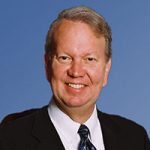
Jon Mills, founder of the Center for Governmental Responsibility and former Speaker of the Florida House of Representatives, was named as interim dean and later dean in 2001. As the law school faced a critical shortage of library and classroom space, Mills saw the law school through planning and fundraising for its $25 million renovation […]
Richard A. Matasar (Dean, 1996-1999)
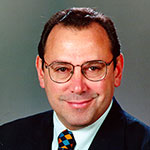
Richard Matasar, former dean of the Chicago-Kent College of Law and Associate Dean at the University of Iowa, became dean of the University of Florida College of Law in 1996. As Matasar’s term began, the growth in faculty and students was beginning to outstrip the facilities of Holland and Bruton-Geer halls, and the library’s holdings […]
Frank T. Read (Dean, 1981-1988)
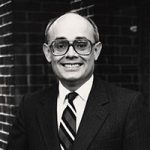
Frank Read came to the University of Florida after serving as law professor at Duke University and the University of Tulsa as well as dean of the Indiana University School of Law. During his term as dean of UF’s law school, Read was able to increase quality improvement funding from the Florida Legislature, including the […]
Grace “Betty” Taylor (Acting Dean, 1981)
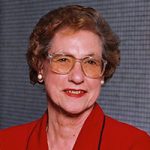
During her long tenure as director of the Legal Information Center, Grace “Betty” Taylor brought UF into the Information Age, pioneering the use of computer databases for legal research and building one of the nation’s most comprehensive collections of audio-visual resources for legal education. She salvaged and rebuilt the Legal Information Center’s collection after the […]
Joseph Richard Julin (Dean, 1971-1980)
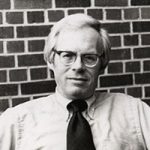
Under the leadership of Dean Joseph Richard Julin, the University of Florida created many of the institutions that define the college today. Julin, a Northwestern University law graduate and former associate dean at the University of Michgan, was named dean in 1971. A year later, the law school launched its Center for Governmental Responsibility – […]
Frank E. Maloney (Acting Dean and Dean, 1959-1970)
As dean, Frank E. Maloney saw the law school through some of its greatest challenges and biggest victories. Named as acting dean when Henry Fenn stepped down in 1958, and named as permanent dean in 1959, Maloney established the Florida Law Center Scholarship Fund to help the law school compete for the brightest students, and […]
Henry A. Fenn (Dean, 1948-1958)
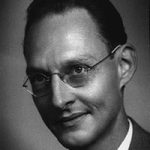
In 1948, Henry A. Fenn, formerly a professor and assistant dean at Yale Law School, was named dean of the University of Florida College of Law. Under his administration, the national reputation of the law school grew due to the expansion of the faculty, strengthening of admissions requirements, the addition of an individualized program in […]
Clifford Waldorf Crandall (Acting Dean, 1947-1948)
Clifford Crandall succeeded Harry Trusler as acting dean after Trusler’s retirement in 1947. During his tenure, the law school began a renovation of Bryan Hall, including the construction of new offices for faculty and administrators. Florida Law Review, the law school’s first student-edited law journal, was launched while Crandall was in office. After his death in […]
Harry R. Trusler (Dean, 1915-1947)
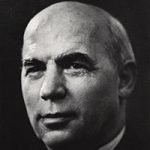
Harry Trusler was one of the two original full-time faculty members at the University of Florida College of Law and the school’s longest-serving dean. Born in Kansas and educated at the University of Arizona and the University of Michigan, he practiced law in Oklahoma and taught at Stetson University before coming to UF. Under his […]
Thomas Hughes (Dean 1912-1915)
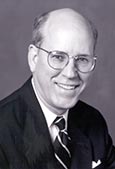
By the time he was invited to succeed Albert J. Farrah as dean of the University of Florida College of Law, Canadian-born, University of Michigan-educated Thomas Hughes was well known as a legal scholar. During his twelve years as a faculty member at the University of Illinois School of Law, he wrote Hughes on Evidence, […]